Wachusett Regional offers a variety of Advanced Placement (AP) classes for students interested in challenging themselves academically. From history to science, these classes give students a chance to earn college credit and learn useful life skills.
AP classes are college-level courses that students can begin taking as early as their sophomore year in subjects in which they excel. After completing an AP course, 10 points are added to the student’s weighted GPA which is an appealing factor for many students.
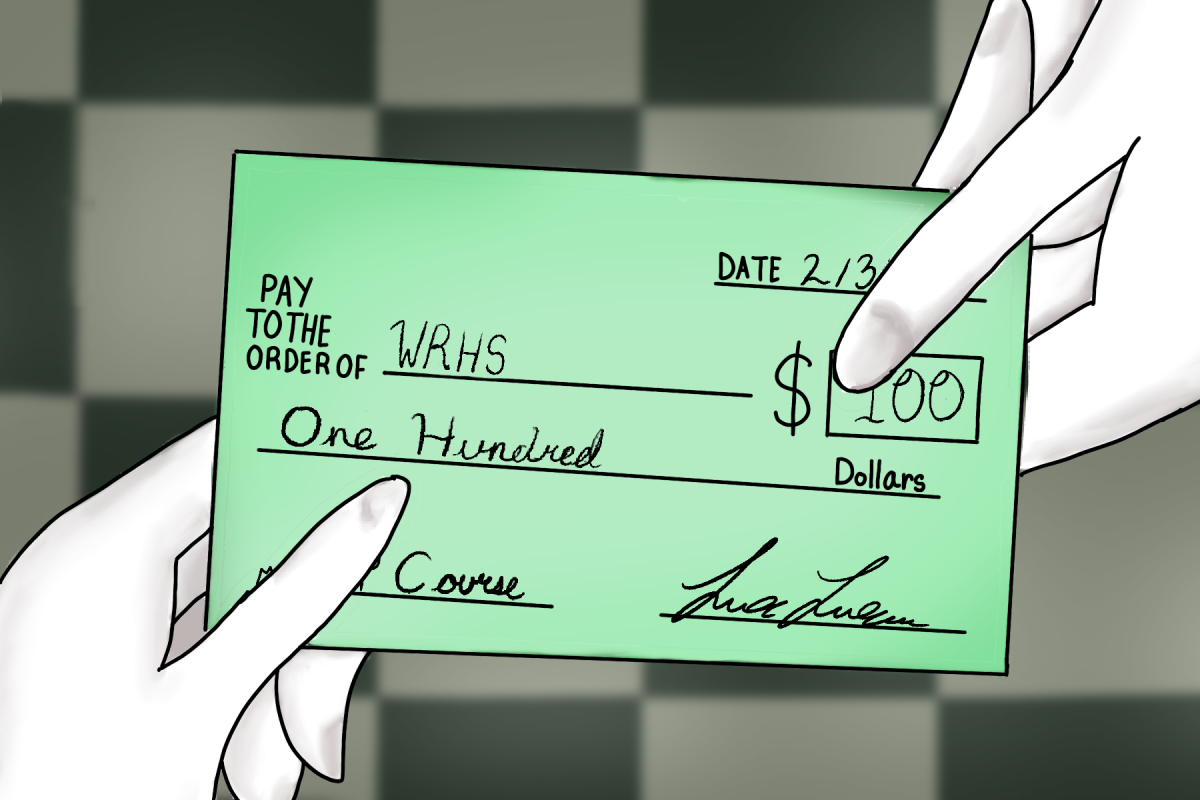
In November, students can pay $100 to take the AP exam in May. Those who get a high enough score, often 4 or 5, will have the opportunity to earn college credit. This opens up possibilities to lessen course loads in college or even graduate a year early if all gen-ed requirements are met. Helping to potentially save money on tuition.
A main concern for students taking AP courses is that they will not do well on the AP test or that the class will be too fast-paced to really learn the necessary information.
When asked about the difficulty of her AP Language and Composition test junior Natalie Lamberton responded, “It wasn’t too bad and we were prepared well.”
Despite being well prepared, AP exams still present the challenge of time. Depending on the subject, exams can range from 2-3 hours, during which students are typically required to answer a mix of questions designed to measure subject-specific knowledge. Various formats for questions include multiple-choice, essays, document-based questions (DBQs), short-answer questions, and spoken/digital responses. If questions are not completed during their given time students do not get another chance to complete them.
Some subjects, like Art, require portfolio submissions instead of a traditional, timed exam.
Still, many students and faculty believe the challenge is worth it. AP courses help build skills that will not only be useful in college but also in real-world careers long after.
“AP Language and Composition definitely helps students be better communicators”, said AP teacher Linda Sasso.
Classes like AP Language and Composition can strengthen students’ writing skills which can be useful in a wide range of careers. Because of this, students are encouraged to choose AP classes that align with their future goals and interests.
However, fitting AP classes into a student’s schedule can be challenging. Some classes take up a block and a half, meaning that one day the class will take up one period and the next it will take up two. This can cause problems in scheduling and time management at home.
“You’re going to be doing more work and it is hard to fit into their schedule. AP Biology, Chemistry, and BC Calculus are all classes and a half so those can be trickier to work into students’ schedules,” said AP Chemistry teacher Nicholas Guerin.
Due to the accelerated rate of AP classes a higher level of independence is required from students.
“Definitely be ready to learn how to be more independent and not rely on the teacher a lot,” said sophomore Chloe Bergeron.
Sophomore James Healey agreed adding AP classes require deeper understanding and more advanced thinking.
“It’s a lot more critical thinking, you need to think outside the box,” said Healey.
While AP classes are demanding they can be rewarding for students willing to put in the effort. Students considering AP classes should be prepared for a challenging fast-paced course, but also a valuable and worthwhile experience.