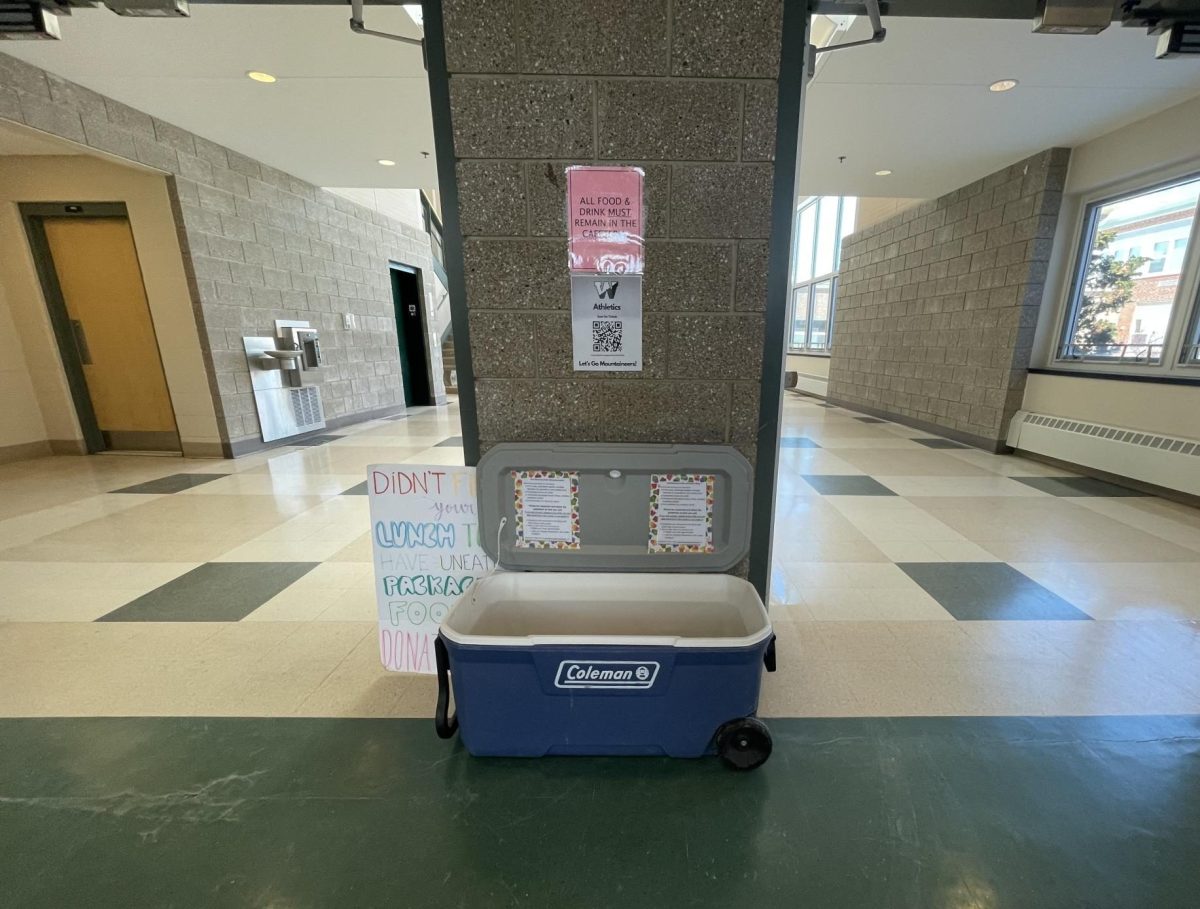
Did you know that there is a place to donate your unwanted food to those who are suffering from food insecurity?
It seems the answer to this question is “no” because not many students contribute to the food bin at the end of the cafeteria. Maybe it is because they do not know where it is. Or maybe it’s because of laziness or forgetfulness. Whatever the reason, too many Mountaineers throw away perfectly good food that could be going to people who need it.
Students often throw away fruits and vegetables they do not want but were given to them due to state regulations that require them to be part of free lunches.
“I usually just throw away the extra fruits and vegetables that the cafeteria workers make me get with my main meals,” said junior Graham Norton.
One problem that causes students not to donate is not knowing the location of the food bin. Located on the back wall of the cafeteria, the food bin is placed where students do not usually walk by, so they often do not see it.
“I don’t even think about the food bin for the most part when I’m throwing away trash. It doesn’t really come to mind,” said junior Ariana Roche.
Many students said that they do not know the reason behind the food bin or where the food goes, making it less important to them and easier to forget.
“I have no clue as to why the food bin is even there. I couldn’t tell you,” said Norton.
Some students have mentioned rolling the food bin on a cart at the end of every lunch so people become more aware of it. Lunch monitors could also easily access the food bin to throw in any extra food that was already going to be thrown out.
“I think when the lunch monitors come around to pick up any leftover trash, they should also collect any unwanted food that is perfect for the food bin to prevent this waste of food,” said Roche.
Another way to solve this problem could be reminding students about the food bin at every lunch and talking about possible items that could be put in it.
“I think that we should make announcements for the food bin at the beginning of lunch so that people don’t forget that it is there,” said sophomore Luna Kozak.
Lunch monitors could also remind students that the food bin is always an option for items they do not want. During lunch, some monitors take extra fruit cups or snacks from students, but not all monitors do, so it would help if all of them participated.
“I think it would be very helpful to have all of the lunch monitors go around the cafeteria during lunch to collect food that was going to be thrown out,” said junior Sophie Breault.
Peer pressure also affects students’ likelihood of putting food in the bin. For example, if one student decides to put extra food in the bin, other students are more likely to follow.
“The only times I have gone to the food bin were when my friend asked me to go with them or reminded me,” said Roche.
Making announcements seems to be the most realistic solution to the low participation in donations.
“I think that having students roll the food bin on a cart is not a bad idea, but with this, I could see many students trying to throw their food into the bin, causing a bad situation. So ultimately, I think that announcements should be made in order to solve this problem,” said P.E. teacher Brian Majoy.